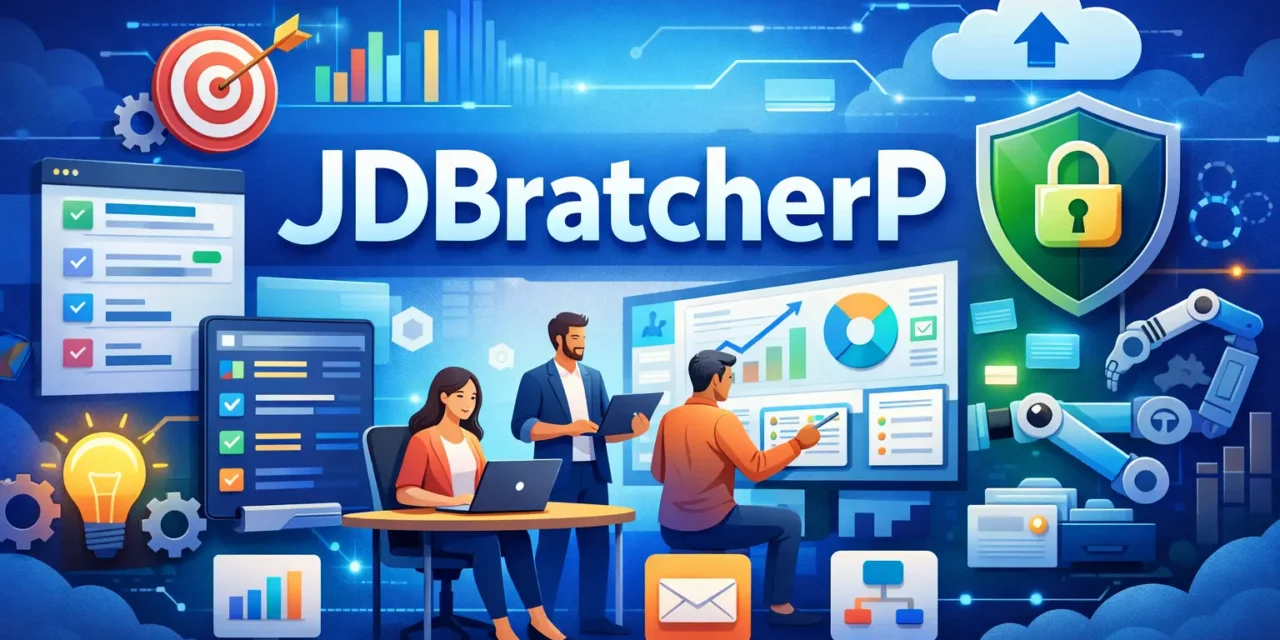
In today’s fast-paced digital world, tools come and go, but only a few genuinely improve how we work. jdbratcherp is one of those rare platforms that blends simplicity, efficiency, and depth into one unified workspace. It’s a versatile digital solution designed to help individuals and teams streamline workflows, manage projects, and collaborate effectively — without the overwhelm of juggling multiple tools.
Despite its unusual name, people quickly discover that jdbratcherp reflects its philosophy: digital systems should adapt to users, not the other way around.
Real-World Uses of jdbratcherp
Imagine a small marketing team preparing for a major product launch. Before, team members might use separate apps for task management, file storage, and performance tracking, creating confusion and missed deadlines. With jdbratcherp, all of these functions live in one place. The result? Clearer communication, smoother workflows, and faster results.
From my personal experience, a simple project that used to take three days to coordinate was completed in just a few hours using jdbratcherp. It’s that effective.
Key Features That Make It Stand Out
Here’s a snapshot of the main capabilities that users appreciate:
| Feature Category | Function | Benefit |
|---|---|---|
| Customizable Workspace | Tailor dashboards and tools to your workflow | Reduces clutter and boosts efficiency |
| Collaboration Hub | Real-time team communication | Keeps everyone aligned effortlessly |
| Project & Task Control | Visual timelines and progress tracking | Helps meet deadlines reliably |
| Integrated Insights | Built-in analytics visualizations | Supports data-driven decisions |
| Cross-Device Compatibility | Access from desktop, mobile, and tablet | Work anywhere, anytime |
These features aren’t just technical add-ons — they create a workflow that feels intuitive, adaptive, and highly productive.
Who Can Benefit from It
jdbratcherp is surprisingly flexible. While it shares similarities with traditional enterprise software, it’s designed for a broader audience:
Freelancers: Consolidate client files, deadlines, and calendars into one workspace.
Educators & Students: Organize lesson plans, collaborative projects, and assignments efficiently.
Small Businesses: Manage inventory, projects, and team tasks without juggling multiple apps.
It’s a tool that adapts to the scale and needs of the user, rather than forcing users to adapt to it.
jdbratcherp vs Traditional ERP Systems
| Aspect | jdbratcherp | Traditional ERP |
|---|---|---|
| Target audience | Individuals & small/medium teams | Large enterprises |
| Deployment | Quick & simple | Often complex |
| Scope | Collaboration & workflow focus | Enterprise operations like finance & supply chain |
| Learning curve | Beginner-friendly | Requires extensive training |
| Cost | Affordable for small teams | Often high and rigid |
Unlike traditional ERP systems, jdbratcherp prioritizes practical day-to-day productivity while still offering scalability for larger projects.
Getting Started with jdbratcherp
Starting is simple and non-intimidating:
- Sign up & explore – Familiarize yourself with the dashboard.
- Use templates – Quick-start options speed up workflow setup.
- Engage the community – Learn tips and best practices.
- Analyze insights – Track progress to make informed decisions.
Treat it as an exploration rather than a requirement; this approach makes learning enjoyable.
Read More: Zoro Bumi22.com: Safety, Risks, and What You Should Know
Conclusion
In a crowded software landscape, jdbratcherp stands out by offering flexible, intuitive, and practical productivity solutions. It’s ideal for freelancers, educators, small businesses, or anyone looking to organize digital work efficiently. By centralizing collaboration, project management, and analytics, it creates a workspace that simplifies tasks, saves time, and boosts overall productivity.
FAQs
Is it free?
There’s usually a free tier with essential features, while advanced options may require a subscription.
Do I need technical skills?
Not at all. The platform is designed to be intuitive for beginners while still supporting advanced users.
Can teams collaborate in real time?
Yes. Real-time collaboration and shared task boards are core features.
Is it suitable for large enterprises?
It can support scaling workflows, but traditional ERP software may still be needed for complex operations.
Which devices are supported?
It works seamlessly on desktops, laptops, tablets, and smartphones.