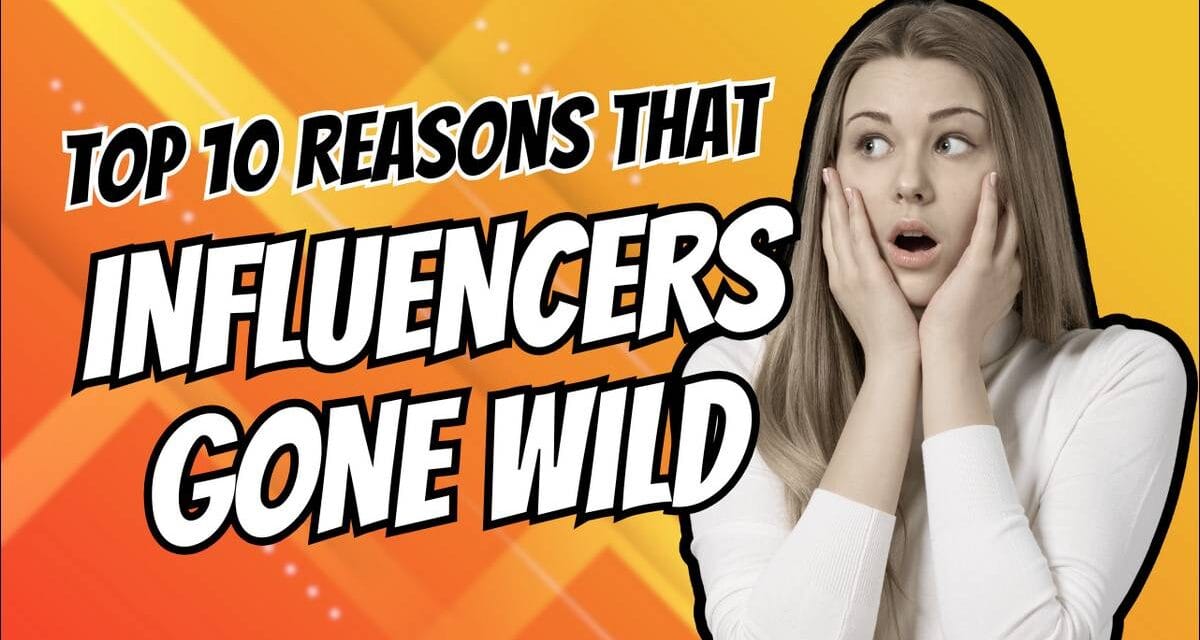
Social media has transformed ordinary people into global personalities almost overnight. Influencers build massive followings through creativity, authenticity, humor, fashion, lifestyle, or expertise. Yet in today’s hyper-competitive digital world, influence alone isn’t always enough to stay relevant. This is where the phenomenon often described as “influencers gone wild” enters the picture — a trend in which creators push boundaries, stir controversy, or behave unpredictably in pursuit of views, engagement, and virality.
These wild moments range from risky stunts and provocative content to public feuds, offensive jokes, unethical promotions, or shock marketing tactics. While many of these actions are designed to attract attention, they also spark debate about responsibility, online culture, and the incentives created by algorithms. Understanding why influencers go wild, how audiences react, and what consequences follow reveals not just the psychology of fame but the ever-shifting dynamics of digital media itself.
1. What It Means When Influencers “Go Wild”
When people talk about influencers going wild, they rarely mean literal chaos — they are referring to moments when influencers operate outside normal social boundaries. These behaviors can include controversial opinions, dramatic public fights, reckless experimentation, explicit content, scandalous marketing, or exploitative endorsements. Sometimes it’s intentional; other times, it’s impulsive.
Wild behavior can be categorized into several themes:
- Shock Value Content: Outrageous, provocative, or controversial posts engineered to spark debate and maximize engagement.
- Risk-Taking Stunts: Dangerous or attention-grabbing actions performed for views, such as climbing rooftops or performing pranks.
- Drama and Feuds: Highly publicized conflicts with other influencers or celebrities that fuel gossip and commentary.
- Ethical Crossings: Misleading promotions, pyramid schemes, unrealistic product claims, or inappropriate sponsorships.
- Raw Personal Exposure: Opening up about personal struggles or messy real-life events, sometimes intentionally and sometimes not.
These moments spread rapidly because social media rewards the unexpected.
2. Why Influencers Go Wild — The Forces Behind the Trend
Influencers rarely operate in a vacuum. Their behavior is shaped by incentives, pressures, and competition that make wild content appealing and sometimes almost inevitable.
Algorithm Incentives
Algorithms favor content that keeps users scrolling, clicking, and commenting. Shock, conflict, humor, and unpredictability consistently outperform calm, neutral content. When creators see certain content types blow up, they instinctively replicate or escalate them.
Attention Economics
Attention is a currency. In a saturated influencer ecosystem, staying visible often means staying dramatic. Creators who feel overshadowed may resort to sensationalism to reclaim relevance or growth.
Monetization Pressure
Brand deals, sponsorships, affiliate commissions, and merch sales depend heavily on visibility. Views become income, making it financially tempting to produce bold or controversial material.
Parasocial Dynamics
Audiences form emotional connections with influencers. When influencers reveal drama, vulnerability, or chaos, audiences rush to consume and comment, deepening the relationship further.
Psychological Drivers
Viral fame is thrilling. Dopamine spikes associated with likes, shares, and comments can create a feedback loop that encourages increasingly extreme behavior.
3. Famous Examples (Without Naming Individuals for Neutrality)
While specific scandals vary, the pattern is remarkably consistent across platforms:
- Controversial Video Episodes that spark outrage due to insensitivity or poor judgment.
- Shock Products such as unusual merchandise designed purely for publicity.
- Public Meltdowns during livestreams or comment battles where emotions spill into the public sphere.
- Extreme Challenges and Stunts performed for viral potential at the expense of safety.
- Controversial Sponsorships involving questionable financial products, risky diets, or unrealistic scams.
- Personal Life Exploitation where breakups, fights, or family issues become content for clicks.
These examples illustrate how virality often emerges from spectacle rather than creativity alone.
4. The Dark Side of Going Wild
Wild behavior may attract clicks, but it also carries significant costs.
Loss of Credibility
Audiences may feel manipulated, disappointed, or misled when behavior is exaggerated for attention. Trust, once broken, is difficult to rebuild.
Brand & Partnership Fallout
Companies seek safe, reputable ambassadors. Controversy can lead to canceled deals, paused campaigns, or reputational distancing.
Platform Consequences
Platforms may demonetize, suspend, or remove content that breaks policies around safety, harassment, nudity, or misinformation.
Legal Risks
Certain stunts, promotions, or misinformation campaigns can lead to fines, lawsuits, or regulatory intervention.
Mental Health Strain
The pressure to constantly perform or escalate can trigger anxiety, burnout, or identity crises. Audiences rarely see the human toll behind viral chaos.
Audience Fatigue
What once seemed shocking can quickly become repetitive. Audiences eventually move on, desensitized to spectacle.
5. When Wild Becomes Authentic, Not Reckless
Not all “wild” moments are harmful. Some influencers break boundaries by being raw, honest, or imperfect. This type of wildness may mean:
- sharing mental health struggles
- discussing taboo subjects
- revealing behind-the-scenes realities
- challenging unrealistic beauty standards
- exposing industry pressure or corruption
These moments resonate not because they shock, but because they feel honest. Authentic boundary-breaking fosters empathy instead of outrage.
6. The Audience’s Role in Fueling the Trend
Influencers don’t operate alone — followers help shape what succeeds. Audience reactions can:
- Reward controversy with engagement
- Amplify gossip through shares and commentary
- Pressure influencers into discussing private matters
- Turn feuds into entertainment spectacles
- Normalize escalation through demand for constant drama
Wild behavior thrives because it performs well. If no one watched, it would disappear.
7. Responsibility and Accountability in the Influencer Era
As the influencer economy matures, questions about responsibility grow louder. Who should regulate wild behavior — platforms, brands, creators, audiences, or governments? Possible frameworks include:
- Ethical standards for sponsorships
- Transparency about paid promotions
- Mental health support for creators
- Platform moderation of dangerous content
- Audience media literacy
- Legal guidelines around scams or harmful advice
Influence, once largely informal, is now a cultural and economic force requiring real accountability.
Read More: How to Partner with G15Tool: A Complete Guide for Collaboration
Conclusion
The phenomenon of influencers gone wild highlights both the power and the volatility of digital fame. Social media rewards spectacle, unpredictability, and controversy, yet those same qualities can destroy careers, reputations, and mental well-being. Wild behavior can propel influencers into viral fame and financial success, but it can just as easily lead to backlash, legal consequences, and public humiliation. The line between authentic rawness and reckless sensationalism remains thin, and creators constantly navigate it in pursuit of relevance.
Ultimately, understanding how influencers go wild — and why audiences fuel it — sheds light on the wider digital ecosystem. As society learns to balance engagement with responsibility, the future of influence may evolve toward healthier, more sustainable forms of creativity that do not rely on controversy to thrive.
FAQs
1. Why do influencers go wild online?
Influencers often escalate behavior due to algorithm pressure, competition for attention, and monetization incentives that reward controversy.
2. Is wild influencer behavior always negative?
Not necessarily. Some forms of boundary-breaking are authentic, artistic, or vulnerable rather than reckless or harmful.
3. Do brands avoid influencers who go wild?
Many do, as controversy can damage brand reputation. However, some brands intentionally partner with edgy creators for marketing impact.
4. Can influencers recover from wild scandals?
Yes. With time, responsibility, and transparency, many rebuild trust — although some lose their audience permanently.
5. Are audiences responsible for encouraging wild behavior?
Audiences play a significant role. Viral attention fuels escalation, making controversy profitable for influencers.